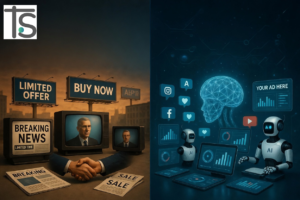
Definition of AI Digital Marketing
AI is a super-smart helper that can write anything, show personalized ads, and even predict customers’ intentions. Such software is Artificial Intelligence, or AI.
AI digital marketing refers to the application of such software to help businesses grow and thrive online. Unlike traditional approaches where marketers rely on their experience and skills, here, AI analyzes enormous amounts of data and gives more accurate recommendations. AI is like having a whole marketing team working all days without any breaks, yet it is more affordable and efficient than hiring employees.
Reasons to Use AI for Your Business Nowadays
Traditional marketing is done manually, including email marketing, writing content, and selecting images for posts. Today, millions of publications are competing for people’s attention daily. AI solutions enable you to attract more clients effortlessly.
Analyzing the preferences of users, AI provides recommendations or makes decisions automatically. Thus, businesses can compete with larger companies, having similar opportunities.
Simple Examples of AI in Digital Marketing
1. Create Content that People Love
Content creation (writing blog posts, creating social media publications, or crafting emails) may be time-consuming. However, with the help of special AI solutions, you may write your texts quickly and easily. Just give the software the topic and guidelines, and the AI creates the initial draft in no time. Then, you may check the result and edit or correct mistakes if there are some.
Most popular AI content creators:
ChatGPT or Grok
Jasper or Copy.ai for marketing texts
Canva Magic Studio for making visuals from textual material
Here is another example of an AI solution for creating visual content:
2. Targeting Users
AI analyzes people’s activity online (what they searched for, watched, and purchased). Then, the software shows ads only to potential customers, which significantly improves efficiency. In other words, your advertising expenses decrease due to the reduced number of ads shown to irrelevant audiences.
Google and Facebook have their targeting systems based on AI technologies. However, modern AI solutions allow small businesses to implement more effective targeting algorithms.
3. SEO
SEO is necessary for attracting more organic traffic (visitors who find pages through search engines). There are multiple AI solutions for analyzing the ranking of websites and providing tips (what keywords should be used, what is the best structure of a publication, and so on).
Among the most popular AI-powered SEO solutions are the following tools:
- Surfer SEO
- Frase
- AI SEO functions of SEMrush
4. Social Media Marketing Simplified
Using AI, you may automate numerous aspects of social media marketing, including:
Determining the optimal timing of publication
Writing posts and captions
Responding to simple user inquiries
Creating short videos from text
Among the most useful social media management tools are the following applications: Buffer, Hootsuite, or Predis.ai.
5. Intelligent Chatbots
It is highly beneficial to have chatbots on websites because they may interact with visitors, suggest appointments, and provide consultations. Thus, chatbots improve client service and reduce the workload of human employees.
Such a chatbot is shown below:
6. Personalized Email Marketing Campaigns
With AI, you can analyze users’ previous purchases, sending them individual emails and personalizing subject lines, and so forth.
7. Analyze Data with AI
AI allows analyzing the performance of marketing campaigns by simplifying statistics. In particular, AI converts numbers into understandable insights, such as “your video performed best on Tuesdays at 6 pm among young professionals.”
Popular AI-based analytics include:
Google Analytics 4
Mixpanel
Real Benefits of AI in Marketing
Time-saving and Cost-efficient
AI enables businesses to get more results with minimum efforts in terms of both time consumption and costs.
Improved Performance
By automating the decision-making process and providing more accurate analysis, AI helps to increase click-through rate and conversion rates.
Working 24/7
Unlike humans, AI works all days without any breaks.
Self-improvement
AI solutions self-improve continuously, learning more and making increasingly relevant predictions.
Equal Opportunities
AI is affordable, and thus, small firms have equal opportunities in terms of promotion with large firms.
Most businesses witness improvements in terms of efficiency (by two to five times).
Simple Steps to Implement AI in Your Digital Marketing Efforts
Step #1 Choose a Topic Area
It may be content creation, for instance.
Step #2 Try Free or Low-cost Solutions First
Start your collaboration with AI solutions from ChatGPT (free), Canva AI (also free), or free AI tools provided by Google.
Step #3 Get Familiar with Prompts (Basic Guidelines)
Prompts mean tips or commands for AI. For example, “Write a friendly Instagram post about our new coffee, 100 words, engaging tone.”
Step #4 Always Review AI Content Before Publishing
Step #5 Track the Performance
See which strategies bring more clients and do more of it.
Step #6 Continuously Expand Your Knowledge
There are new AI marketing tools almost every month.
What Should You Be Careful About While Applying AI to Your Marketing Strategies?
First, be aware that AI is not always accurate and unbiased. Therefore, it is essential to review all the suggestions made by AI carefully, always verifying facts, making personal corrections, and following laws (including advertising policies and protecting customer privacy rights).
AI Marketing: What Is the Future?
As soon as AI development continues, more sophisticated techniques will appear. Among them:
Creating full video ads based on written prompts
Forecasting upcoming trends
Creating extremely personalized marketing campaigns
Voice Search Optimization
Virtual Try-ons
AI Digital Marketing: Conclusion
Implementing AI into digital marketing activities is a great idea, which is quite easy and affordable. Just try some AI solutions mentioned above.